

Sustainability at Synthite: Responsible Chemical Manufacturing, Practical Progress
Synthite is committed to sustainable, responsible chemical manufacturing that supports our customers, our people and our region. We are reducing our environmental footprint, operating to the highest UK safety standards and exploring lower-carbon pathways that deliver measurable, long-term progress. Our goal is clear: a stronger, more sustainable future built on reliable UK manufacturing.
Sustainability in Chemical Manufacturing: Creating Long-Term Value
At Synthite, sustainability means operating responsibly, reducing risk and creating long-term value for our customers, our people and the community in which we operate. Our approach is grounded in what is operationally deliverable, not aspirational targets that are commercially or practically unrealistic.
We focus on safe, efficient operations and continuous improvement as the foundation of responsible manufacturing. Alongside this, we are actively assessing future opportunities. These include lower-carbon feedstocks and alternative supply pathways. The aim is to support customers’ progress toward more sustainable production without compromising reliability, quality or commercial viability.
UK Manufacturing as a Sustainability Choice
Retaining chemical manufacturing within the UK is itself a sustainability decision. UK manufacture improves supply reliability, reduces the emissions associated with long-distance transport and supports compliance with some of the world’s most rigorous safety and environmental standards.
At Synthite, we see this as a more sustainable way to do business, both for our customers and for the environment.
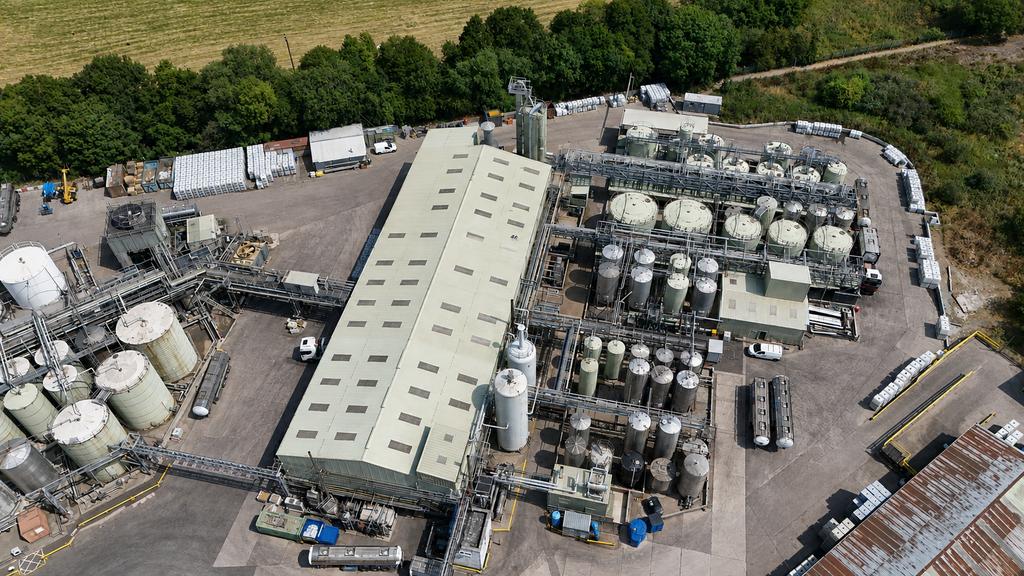
Our Commitment
Sustainable & Responsible Operations
Managing Environmental Impact
Minimising our environmental footprint through responsible resource use, waste reduction and emission control.

Supporting Our Employees
Creating a safe, inclusive and supportive workplace where our people can develop and thrive.
Responsible
Operations

Strengthening Communities & Economy
Investing in local communities, creating jobs and supporting long-term economic growth where we operate.

Operations

Improvement

Practicality
Lower-Carbon Chemical Manufacturing Pathways
A Phased, Practical Approach to Carbon Reduction
Synthite’s carbon reduction strategy is built around incremental, commercially realistic steps rather than distant aspirational targets. Because formaldehyde’s carbon footprint is directly linked to the methanol used in its production, changes to methanol feedstock provide a scalable lever for reducing the embedded carbon of the chemicals Synthite manufactures and supplies.
The same manufacturing and supply infrastructure that handles conventional methanol today can accommodate mass-balance certified, bio-based and e-methanol as these options become commercially viable, enabling customers to transition toward lower-carbon sourcing without changes to their processes.
Methanol’s Role in Enabling Lower-Carbon Chemistry
As a major UK methanol supplier, Synthite plays a role in enabling several sustainability pathways. Methanol is central to biodiesel production, converting waste oils and renewable feedstocks into lower-carbon transport fuels. It is also used in direct methanol fuel cells and as a liquid hydrogen carrier.
By supplying methanol into UK industry, Synthite is supporting the foundation on which future bio-methanol and e-methanol transitions will be built, without the infrastructure needing to change.
REGO Renewable Electricity
Electricity across the Mold site is 100% REGO-certified from renewable generation, reducing the market-based carbon footprint of production.
ISCC+ Mass Balance Methanol & Formaldehyde
ISCC+ mass balance methanol & formaldehyde available.
Bio-Based & Low-Carbon Methanol Feedstocks
Assessing bio-based & blue methanol feedstock options. As they become commercially viable, they can be integrated into end products.
E-Methanol & Green Chemistry Pathways
Existing methanol infrastructure and supply network are compatible with e-methanol as this becomes more commercially available. This provides a pathway to significant carbon reduction.
Supporting Sustainable Chemical Supply Chains
Synthite’s products, services and operational characteristics support customers in making progress toward their own sustainability objectives, without compromising supply security, product performance or commercial viability.
Engineered Wood & Lower-Carbon Construction Materials
Formaldehyde-based resins are central to the manufacture of MDF, particleboard, OSB and plywood. These engineered wood products make more efficient use of timber resources by incorporating wood fibres, particles and smaller-diameter material that would otherwise be underutilised.
Methanol Enabling Biodiesel & Renewable Fuels
Methanol is an essential reagent in biodiesel production, converting waste cooking oils, tallow and other renewable feedstocks into lower-carbon transport fuels via transesterification. Without methanol, large-scale biodiesel production is not technically viable. Synthite supplies bulk methanol to UK biodiesel producers as part of the UK’s renewable fuel supply chain.
Toll Manufacturing, Smarter Use of Existing UK Assets
Synthite’s toll manufacturing capability allows customers to access existing production infrastructure without building their own facility. By concentrating complex processing in a single, well-controlled site, customers avoid the embedded carbon of new construction, reduce energy duplication and benefit from the efficiencies of a shared, optimised manufacturing environment.
Circular Economy, Recycled Packaging & Resource Efficiency
The majority of packed products supplied by Synthite contain recycled polymer. In formulation and process development work, the focus is on optimising raw material efficiency, minimising waste and identifying opportunities to recover value from process side-streams where possible.
Frequently Asked Questions
At Synthite, sustainability means operating responsibly, reducing environmental impact, protecting people, and creating long-term value for customers, employees, and the wider community. This approach is built around safe operations, continuous improvement, and reliable UK-based manufacturing.
Synthite’s sustainability strategy focuses on three priorities: reducing environmental impact, supporting and developing employees, and strengthening the local community and regional economy where the company operates.
Synthite is reducing environmental impact by improving energy efficiency, optimising manufacturing processes, and managing resources responsibly across its site. The company is also exploring waste reduction and circularity initiatives, including improved packaging recyclability and the use of recycled materials where practical.
Synthite’s environmental management is supported by ISO 14001 certification and recognised through ISCC+ certification and REGO certification.
Synthite is taking a practical, phased approach to reducing carbon intensity by exploring lower-carbon methanol feedstocks, including bio-based and blue methanol. This approach balances sustainability goals with reliability, quality, and commercial practicality for customers.
Synthite has made a multi-million-pound investment in a new formaldehyde plant at its Mold site. The upgraded facility improves efficiency, reduces energy consumption, and strengthens the long-term resilience of UK-based manufacturing.
Retaining chemical manufacturing in the UK improves supply reliability, reduces emissions associated with long-distance transport, and supports compliance with some of the world’s most rigorous safety and environmental standards.
Methanol plays a key role in sustainability by enabling biodiesel production from waste and renewable feedstocks, supporting cleaner transport fuels. It is also used in direct methanol fuel cells and as a hydrogen carrier, helping advance low-emission energy technologies.
While the current market is largely fossil-based, Synthite supplies high-quality methanol that can transition to bio-methanol and e-methanol as these technologies scale. This helps build the foundation for future low-carbon fuel and chemical pathways.
Formaldehyde-based resins support sustainable material systems by enabling the production of engineered wood products such as MDF, particleboard, OSB, and plywood. These materials use timber efficiently, store biogenic carbon, and often have lower embodied carbon than alternative construction materials.
Formaldehyde is manufactured at Synthite’s Mold site under strict safety and environmental controls, supported by continuous monitoring, robust operating standards, and regulatory oversight to protect both employees and the local community.
Through UK-based toll manufacturing, Synthite helps customers reduce risk, improve efficiency, and avoid the environmental impact of building additional production facilities. Concentrating complex processing in a single, well-controlled site supports safer and more resource-efficient supply chains.
Synthite works with customers to optimise processes, improve raw material efficiency, and responsibly manage by-products. Where practical, the company focuses on reducing waste, recovering value from side streams, and supporting circular manufacturing approaches.